Tag Archives: Cats

Another Move is Behind Us


We made it through another move and we still have three cats. The bad news is that they are stuck inside without a catio.

The time leading up to the move went well for the cats. I thought they would be more stressed but they seemed to enjoy investigating all the changes.

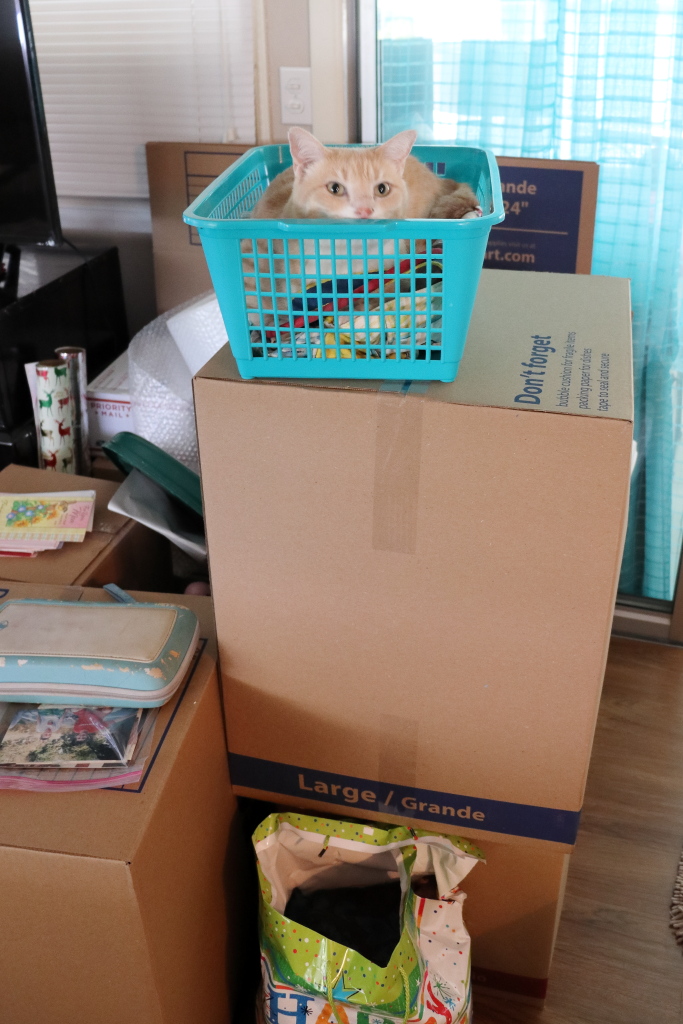
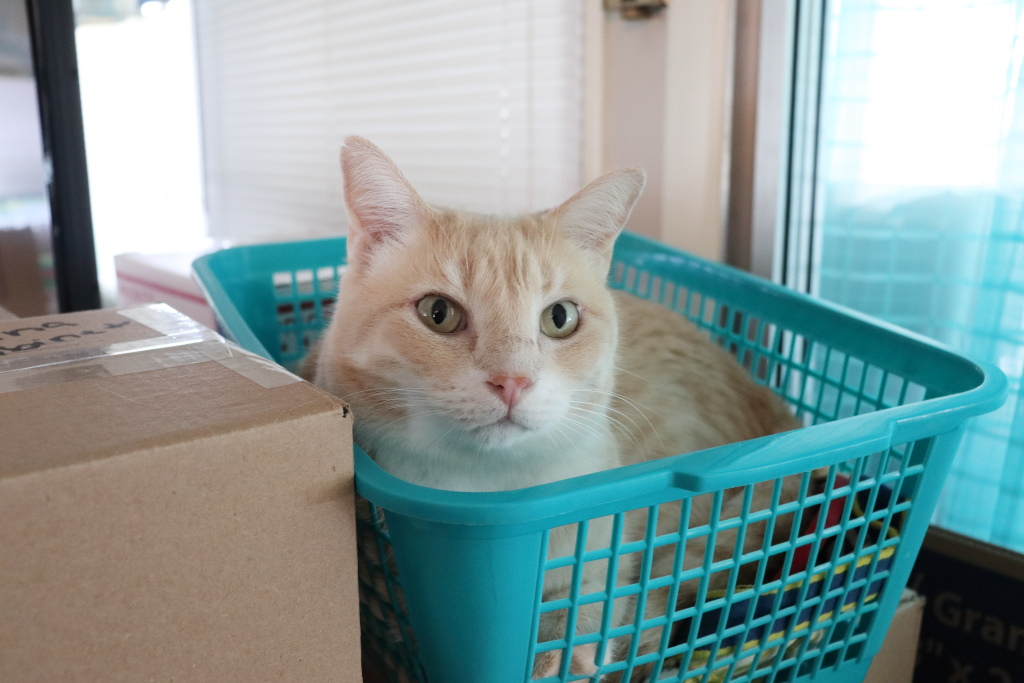
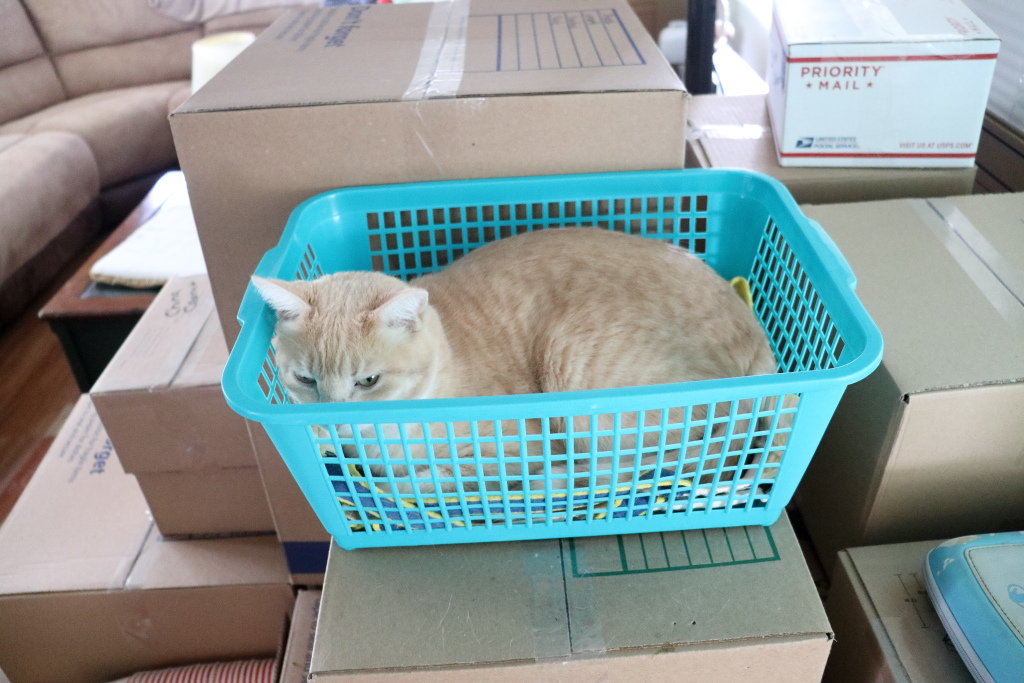
Floki was not as bold but he was less nervous than I expected. I did feel bad for Frankie’s new favorite spot because I brought boxes to the new house during the week before the move and Frankie’s basket had to be lowered until there was nowhere to put it.

The movers were here at 8:00 a.m a week ago on Saturday. We moved most everything out of the catio and then put the cats out there while the movers emptied the house.

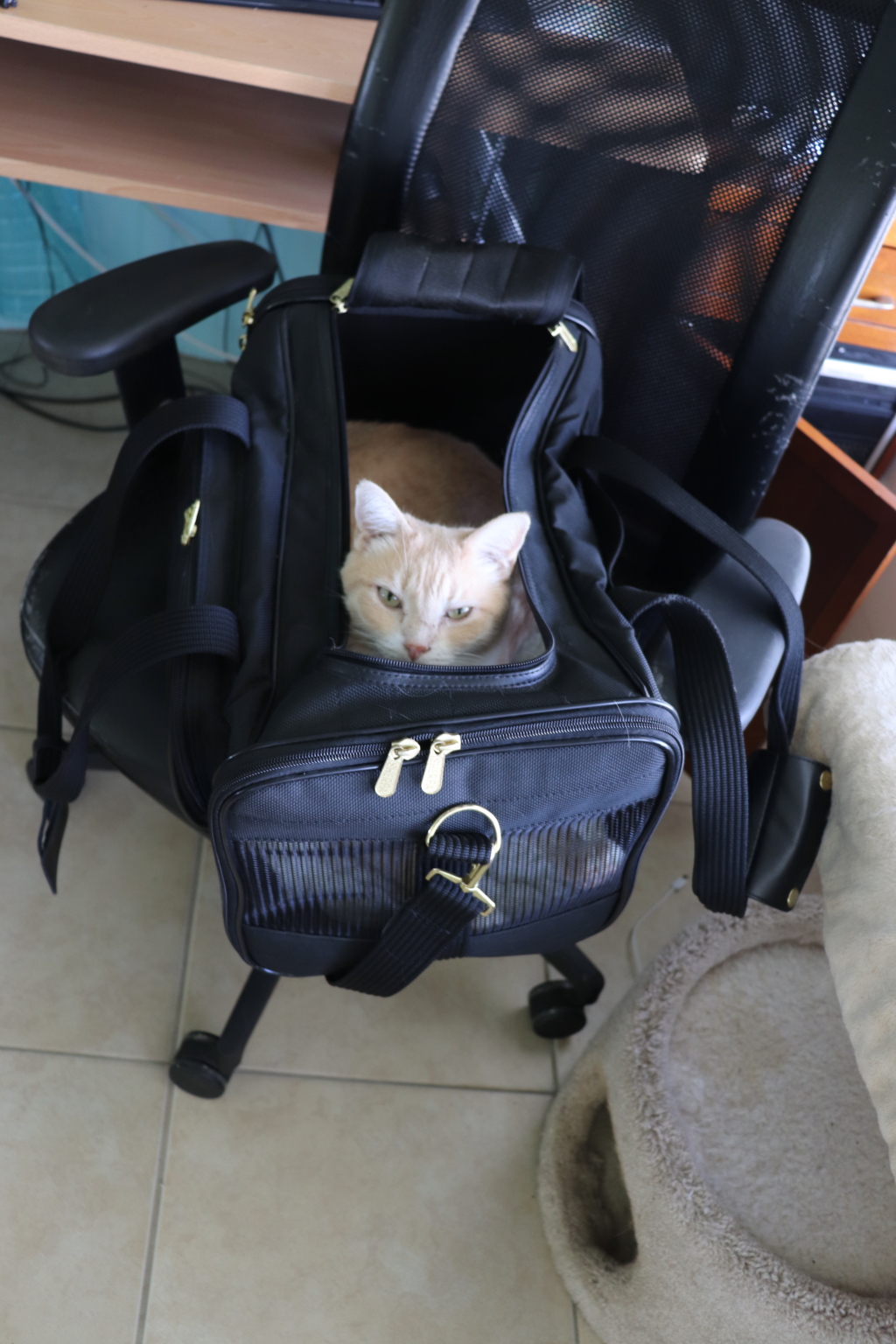
When they finished Rose took Floki in her car and I took Chris and Frankie in my car. I put Chris in front because his carrier was the biggest and put Frankie in the back seat.

Frankie was good but Chris was much more of a whiney baby than I expected. He cried practically the entire twenty-minute car ride. I posted a video below but Youtube rotated my video sideways with no option to rotate it back so it is what it is.
When we got to the house we had to keep them in one of the bedrooms until the movers finished and then we let them out to explore the house. Chris and Frankie were excited and explored everywhere while Floki hung out under the bed. You can see a brief glimpse of Floki at around the four-minute mark.


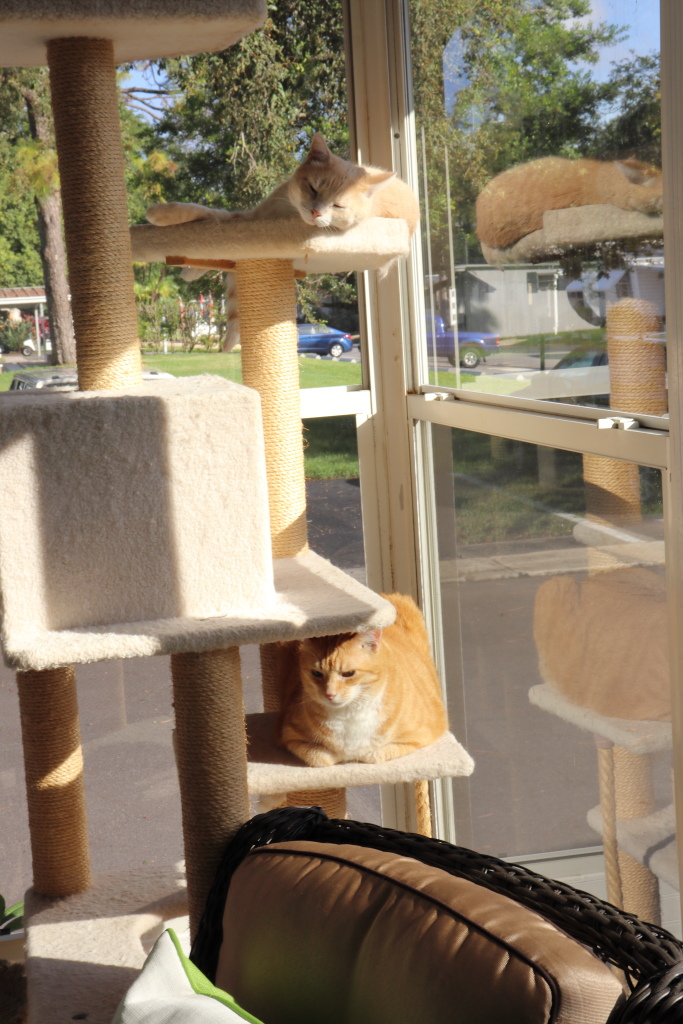
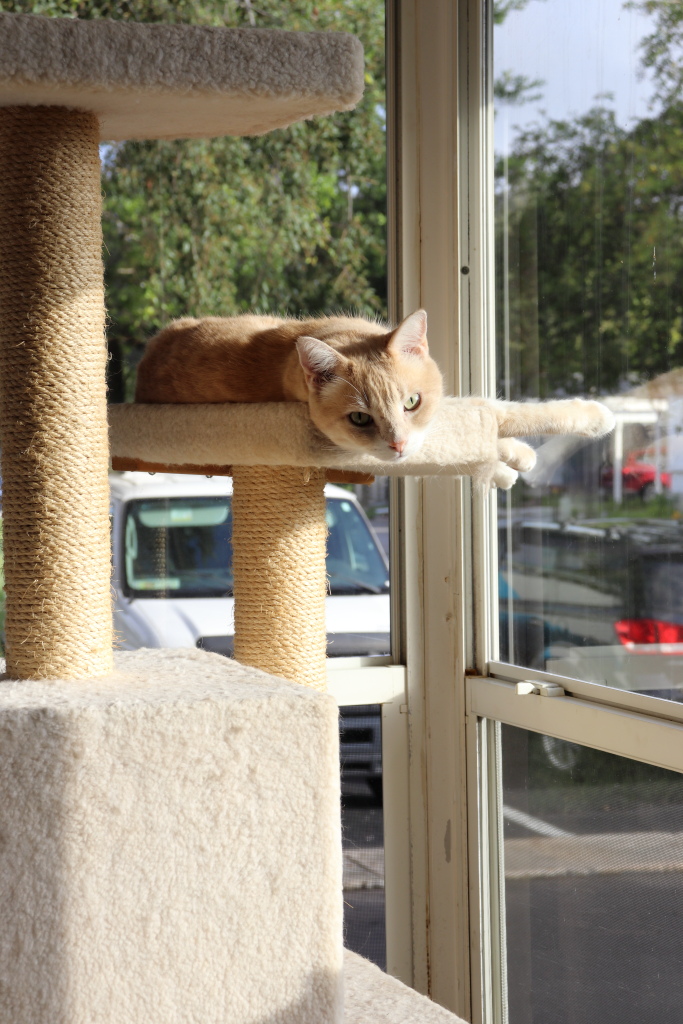
The new home has a Florida room with big windows that let in more sunlight than our last home, which had awnings that kept much of the sun out. As you probably know, cats love lying in the sunbeam.

cats in sunshine cats in sunshine

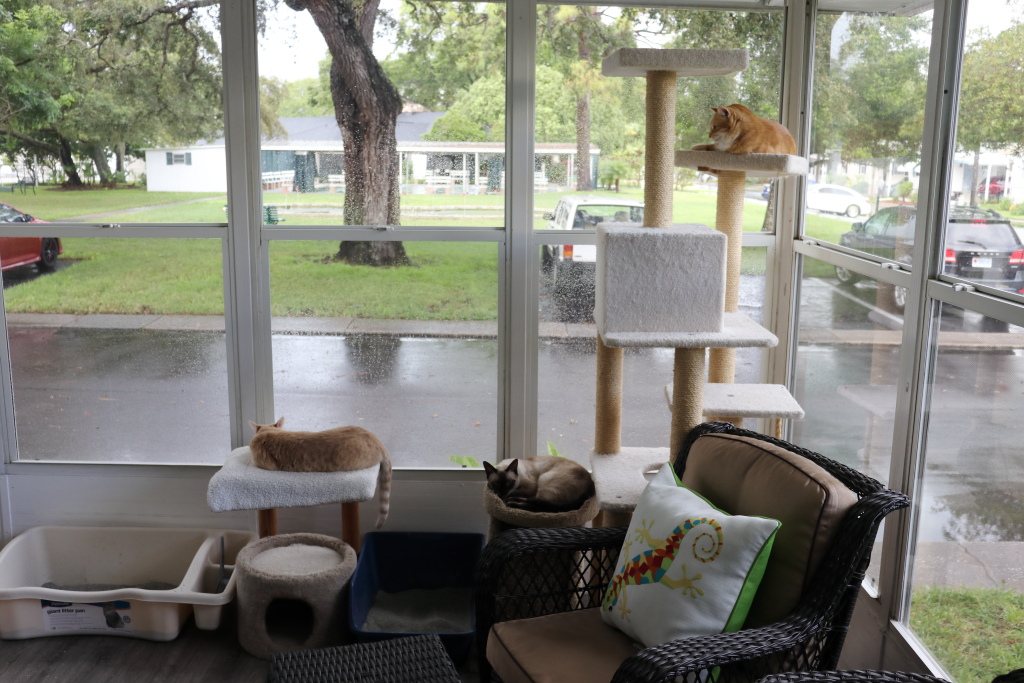
Of course, it not always sunny in the Sunshine State.

cats lying in window during rain

My wife thought it would be a good idea to put curtains up but I thought it would ruin the view. She said they were sheer curtains and they were transparent so it would be no different than looking through the window without curtains. I said, “of course there is a difference.” If there was no difference than why are we wasting time and money putting them up? I didn’t actually say the last part.

I did open the curtains in the corner just to be a rebel.

That’s it for now. I’m sure I will have more stories to tell as we continue to unpack and settle in.

Photo Friday: Cats on Film


Back in January 2010, while I was still living in Myrtle Beach, I bought a film camera from a coworker who only used it for a college photography class. By that time I had long since given up my film cameras and was on my second digital SLR, which I got for Christmas a few weeks before and which I just replaced for my birthday last month.

This camera was called a Canon Rebel X and I bought it because I planned to sell it on Ebay for a decent profit. I also missed shooting film and thought it would be fun to buy a roll of film and test it. I practically grew up shooting film and I can understand why some people, even today, prefer it over digital. I am not one of those people but I can understand it.

Naturally, some of my test subjects were my cats. So sit back and relax while I wind the clock back eight and a half years.

Chris

Chris

Flash

Abbey

Tigger and Alex

Okay, we are back in 2018. How was the ride?

Dual Vet Visit Fail


Recently we needed to bring Frankie to the vet to get his rabies vaccination so we could get him registered with the county. We needed to do that because the place we are moving to requires it. We also needed to bring Floki in to get his nails clipped so we thought we could bring them both at once.

I inquired about the price and was told that an examination was required by the state and the cost would be well over a hundred dollars. I forgot the exact amount. I called the vet around the corner from them and they charged under $50 on Saturdays and Wednesdays, no examination needed. Hmmm. Anyway, we made an appointment at the rip off vet for Floki’s nail trimming that Saturday and decided that Rose would bring Floki to that appointment while I brought Frankie to the other vet for his shots.

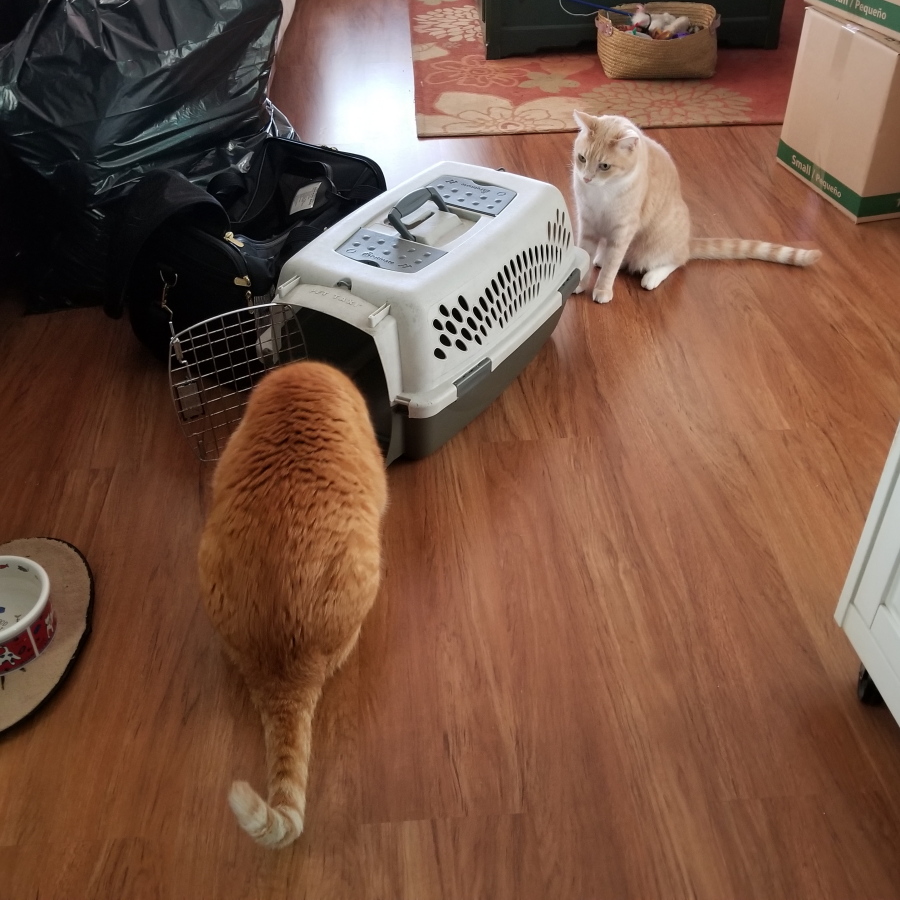
I brought two carriers inside very early that day so they could get used to them being there. It was Floki I was concerned about but he seemed indifferent about the carriers.

Chris and Frankie were more interested.

When it came time to go we decided to get Floki first because he was the most likely to run and hide. We recently bought a top loading carrier because Floki is so difficult to get in the carrier. He struggles like nothing I have ever seen before. Rose grabbed him and I assisted in shoving him inside and zipping it shut. Except the Tasmanian Devil managed to twist his way out and he disappeared down the hall and under the bed. We had to call the vet and cancel the appointment. I told them the truth, as embarrassing as it was.

Frankie was much easier to deal with so Rose and I both brought him in for his shots. He seemed pretty comfortable in the vet’s office.

There was so much to explore.

After a short time, the vet came in, gave him his shot and license and we were home in no time.

Now we need to find a new vet close to our new home. I don’t mind though because I have never been too impressed with our usual vet, especially after what happened to Puck.


We are Moving . . . Again


I think I inherited a nomadic gene. We are moving again and this will be my twenty-first home in my lifetime. Since 2007 it will be our seventh home and since adopting Chris late in 2009 it will be our sixth home. Chris is an old pro at moving but Frankie has only moved once and Floki has not yet gone through a move.

So far, everyone is fine. I think Frankie is actually enjoying the disruption.

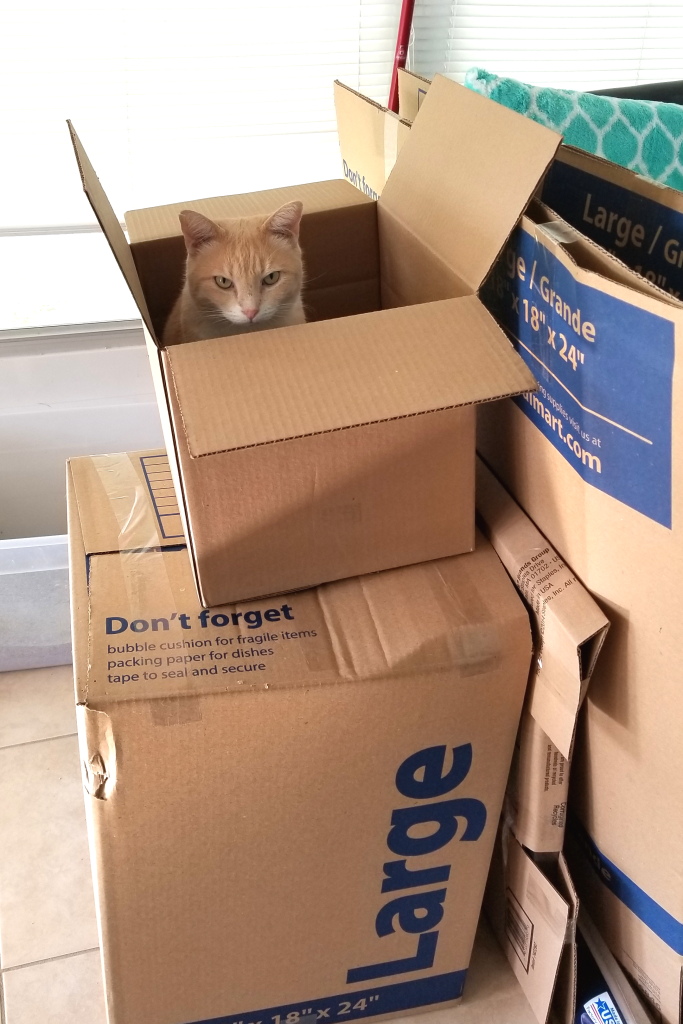
Floki is also enjoying the moving boxes.

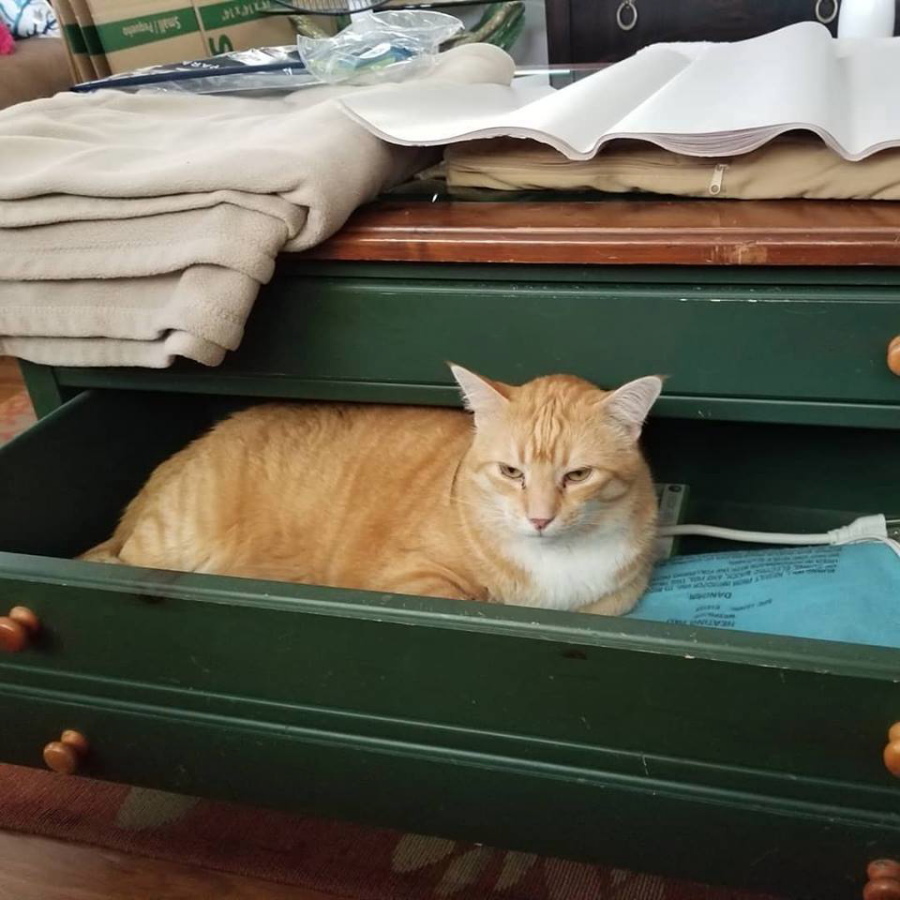
Chris is happy when I open a drawer to pack its contents.

Frankie is the most excited by the growing pile of boxes. Rose set a basket down temporarily until Frankie found it.

Now it is his favorite spot. We removed the uncomfortable pieces and now have it as a “crow’s nest” for Frankie to oversee the operation.

The reason we are moving is that we need a bigger place. We have been downsizing for several moves and now it is time to upsize. Unknown to me at the time, we bought a house that wasn’t prewashed and it has shrunk. It is no longer able to house all my wife’s clothes.

In addition to having more room, we are moving to a better location. My wife and I spend a lot of time at the beach, either at the beach itself or at one of the many great restaurants on the barrier islands. This home will put us closer to our favorite activities.

The bad news is that we are losing the catio. This will not be welcome news to the cats. Worse, the pet restrictions at the new place are more strict than here so taking Frankie for a walk and letting Chris out to eat grass could be difficult. We will try to figure out a way to add a catio to the new place but the side door is too close to the front so enclosing it will cause our driveway to be too small for two cars. Hopefully, we will figure something out.


Cats Are Jealous


I read somewhere about a year or so ago that cats don’t experience jealousy. I don’t remember the author but I do remember he had letters after his name so he was some kind of expert. I suppose if I was paying attention I would have noticed those letters to be “BS” because, even then, I knew he could not have possibly had cats. Cats can certainly be jealous. I know that because I live with Chris, who, if he was human, would be like the crazy ex-girlfriend who breaks into your house to go through your computer history (yes, that happened to me).

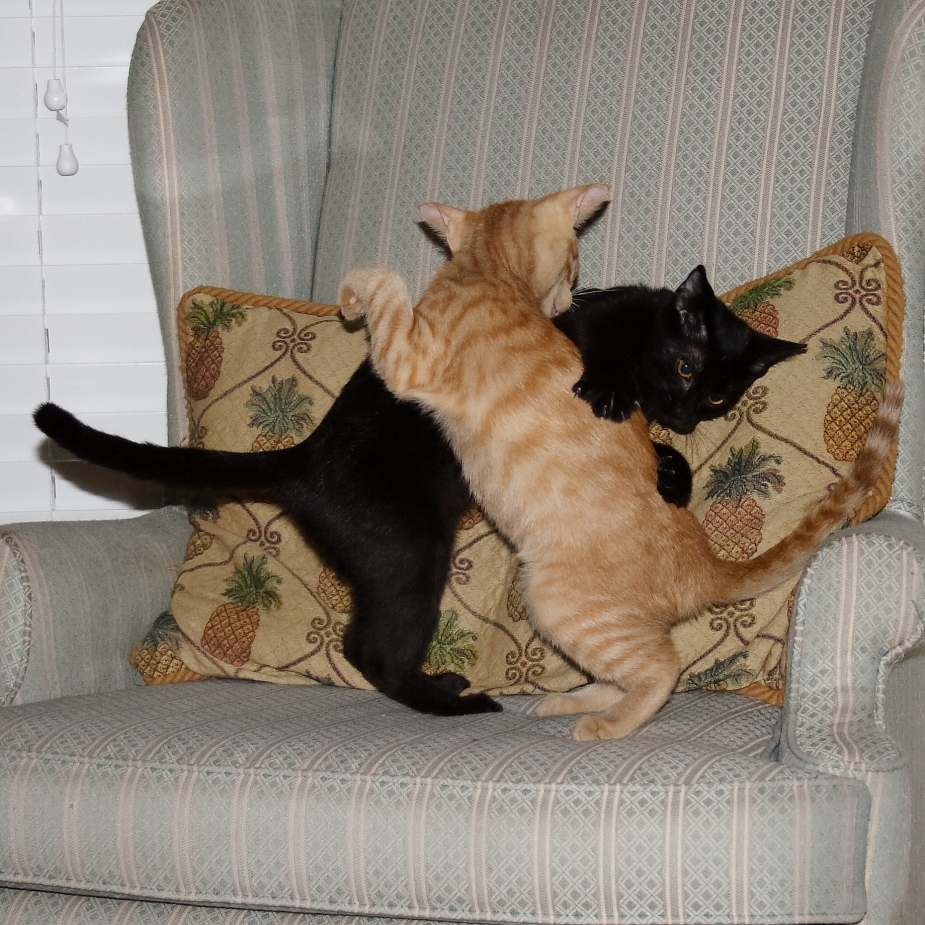
I know Chris is an extreme case but I see evidence of jealousy sometimes in our other cats. Floki, for example, will get mad at Chris if he is in the bedroom with Mom in the morning when Floki likes to get attention from her. If a new box is introduced, there can be fighting over who gets first dibs on getting inside. I don’t know if that is jealousy or its evil sibling, envy, but it’s so similar who’s counting.

Here is Chris while Frankie is on my lap. Can someone tell me that this is not jealousy?

Rabbit Nurses Young Outside Our Catio


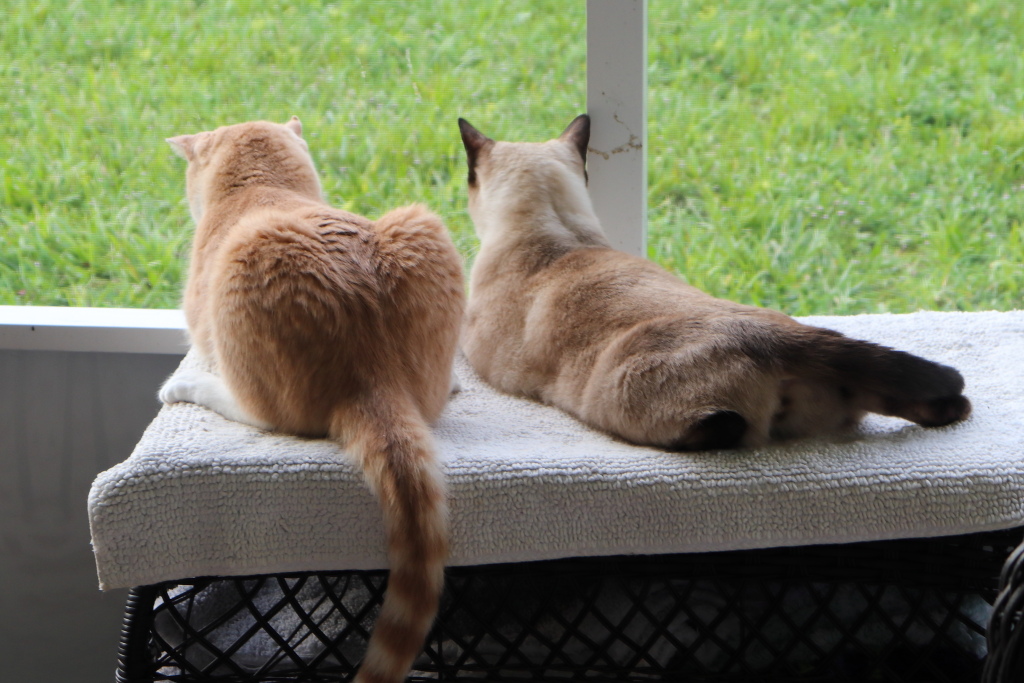
I peeked out the window Saturday and saw Frankie and Floki lying together on the catio. I almost never see those two together so I had to go out and take a photo.

cats looking out window

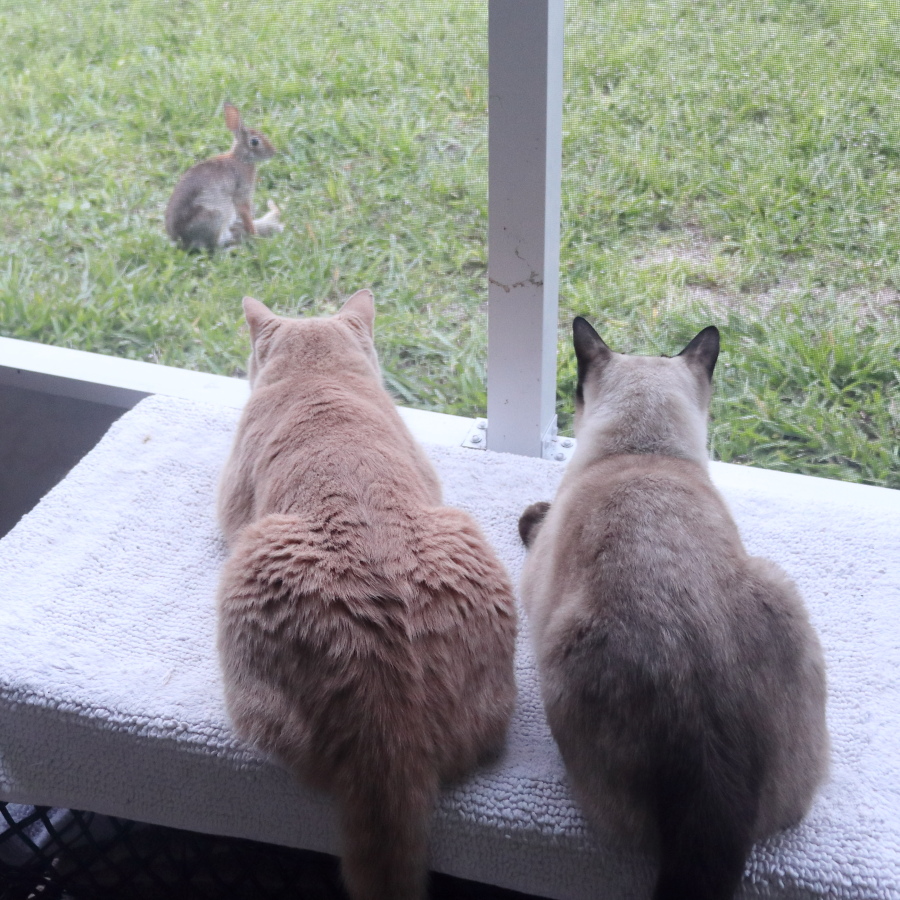
The next day I say them again in virtually the same spot but this time noticed they were watching a bunny rabbit that was hanging out very close to them. I again grabbed my camera and went outside but when I got out there I noticed the rabbit wasn’t alone. She was nursing two baby rabbits.

This was amazing to see by itself but even more amazing because she seemed oblivious to the cats just a few feet away. She also dug a borough next to the catio just under the cat’s viewing platform.

cat looking at baby rabbits

Living in an urban area, it is always a pleasure to see mother nature at work. Here is a video I took of the mother rabbit and her two young ones

Basic Photography for Bloggers


When blogging was young it was mostly about the words but now images are a major part of almost every blog I see today. I consider photos to be very important on this blog, partly because they help to tell the story. With that in mind, I want to share some of the things have learned over the years.

Photography is all about collecting light and there are three major components that help you do that. Each one has its own advantages and disadvantages. I’m talking about shutter speed, aperture, and ISO. Each of these can be adjusted to help get the right amount of light for a good exposure but knowing which ones to adjust is a challenge because there are so many factors to consider. Let’s start with aperture.

Aperture

Aperture is simply the size of the opening in the lens. This is also referred to as an f-stop. I believe the “f” is for “factor” and it is a ratio of the focal length of the lens to the diameter of the opening, or pupil. For example, on a 50mm lens f-11 would be 50/11 or 4.5mm. An aperture setting of f-1.4 would be 50/1.4 or 35.7mm. The important thing to remember is that the smaller the number the larger the opening.

The size of the opening matters because whenever you double the size of the aperture you cut in half the time it needs to stay open for a proper exposure. Some lenses are considered “fast.” These are very expensive but have apertures as wide as f-1.0. Some are even wider than that. These are good for very low light conditions or when the shutter speed needs to be very fast.

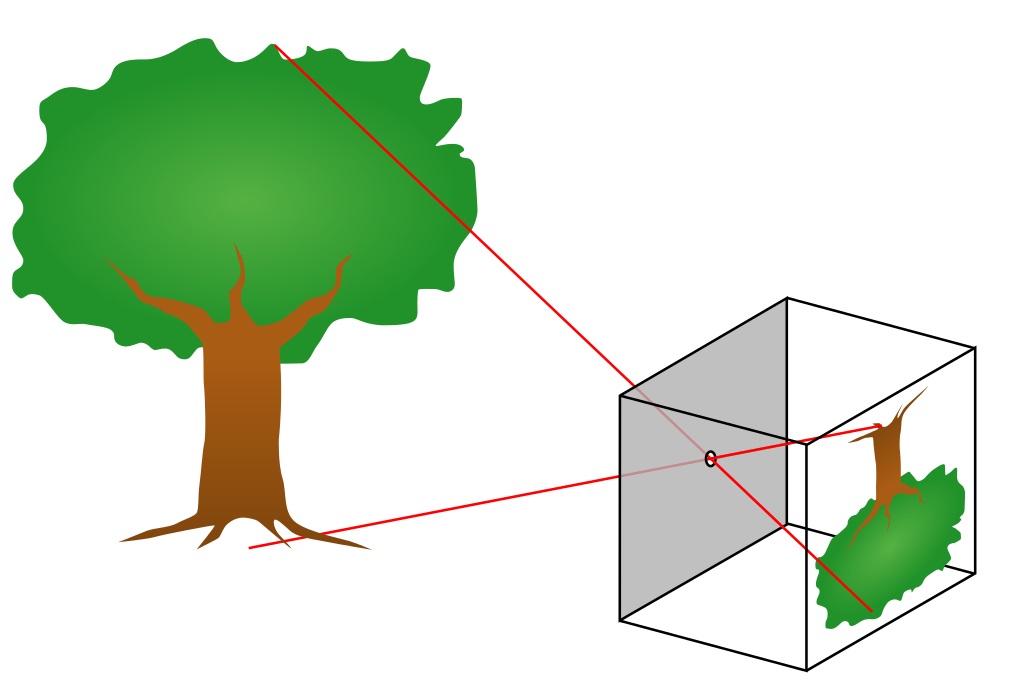
Of course, for every plus in photography, there is a minus. The larger the aperture, the smaller the area that will be in focus. To understand why let’s look at a pinhole camera.

Source Wikipedia

This is the most basic type of camera where a pinhole is made on one side of the box and photographic paper placed against the other side. To get a perfectly sharp image, the pinhole would have to be no wider than a single ray of light, but that would let in so little light that the exposure time would be extremely long. A larger opening would shorten the exposure time but then the light coming from the top of the tree, for example, would enter the opening through the top of the hole, the bottom, left, right, middle, etc. The light would then strike the film at slightly different spots causing the image to be out of focus.

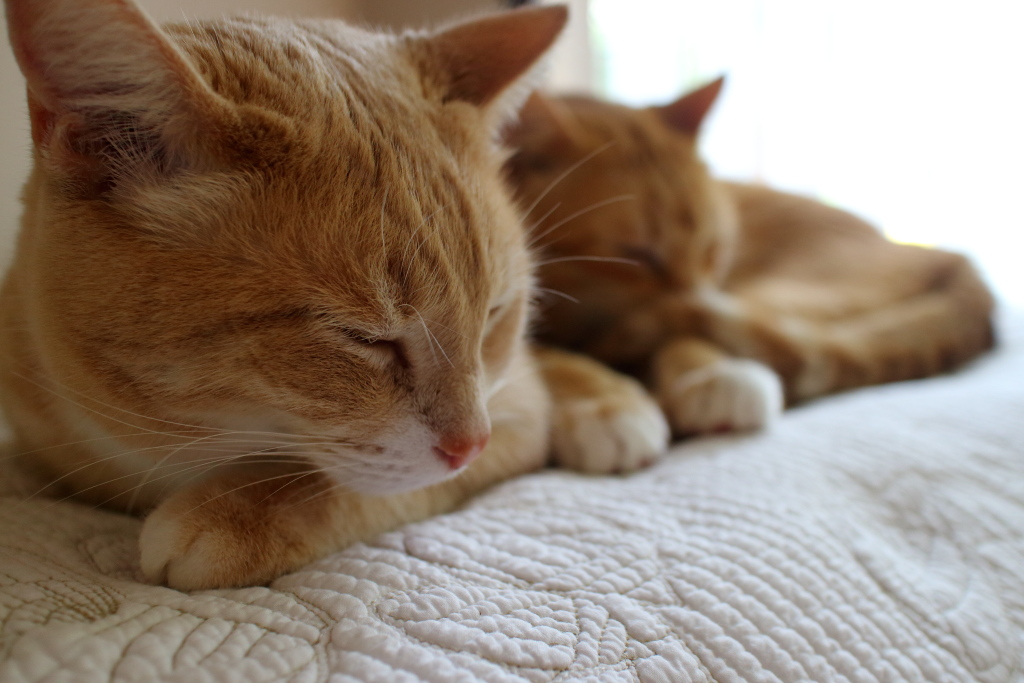
The camera lenses solve that problem to some degree but they create instead a focus zone. That essentially means that one area of your photo, your subject hopefully, is in perfect focus and a certain area in front and behind is in acceptable focus. The rule of thumb is one third in front and two thirds behind. This zone of focus is also called depth of field. The important thing to know is that the smaller the aperture, the larger the depth of field.

Below is an example of a photo with a small depth of field. This is Frankie and Chris taken using an f-2.2 aperture. Notice how Chris is close to Frankie but still out of focus. Sometimes this is desirable. I think this photo works well with just Frankie in focus.
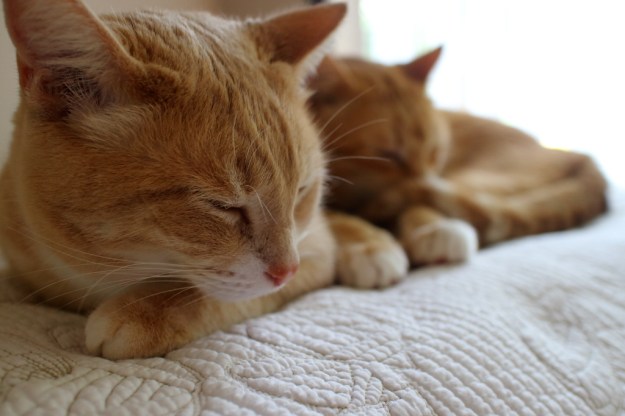
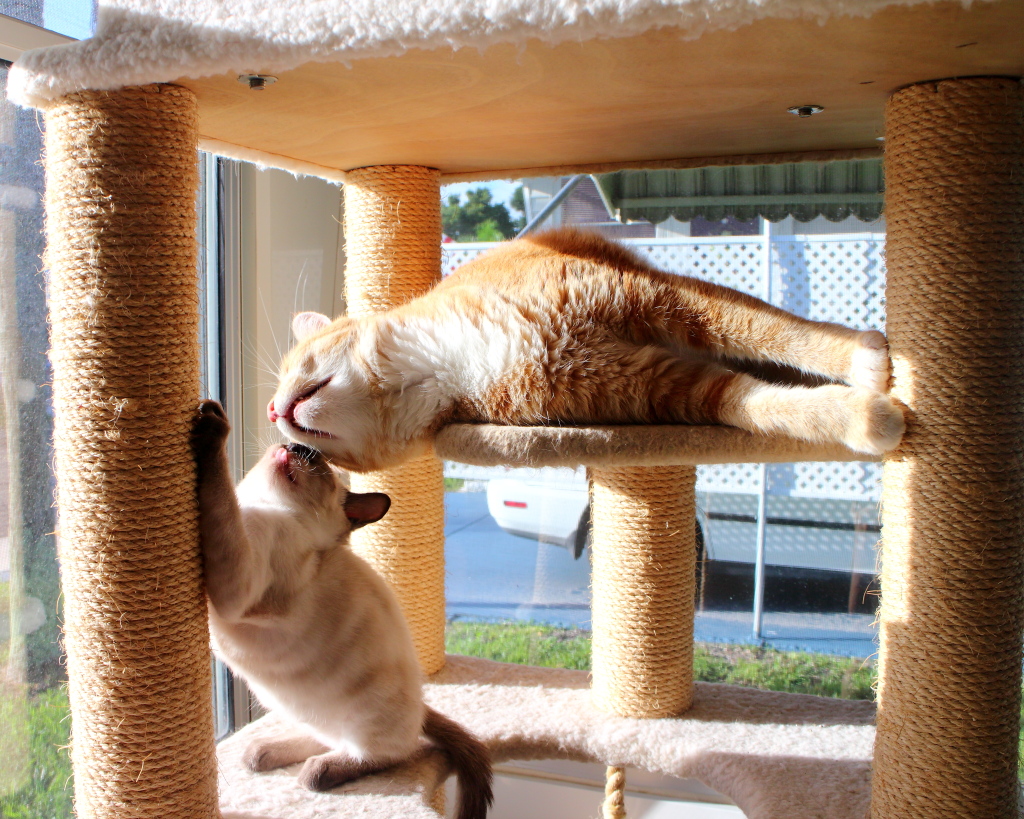
I took the photo of Floki and Chris below using a smaller aperture of f-7.1. Notice how much more is in focus. Even the car in the background is relatively sharp.

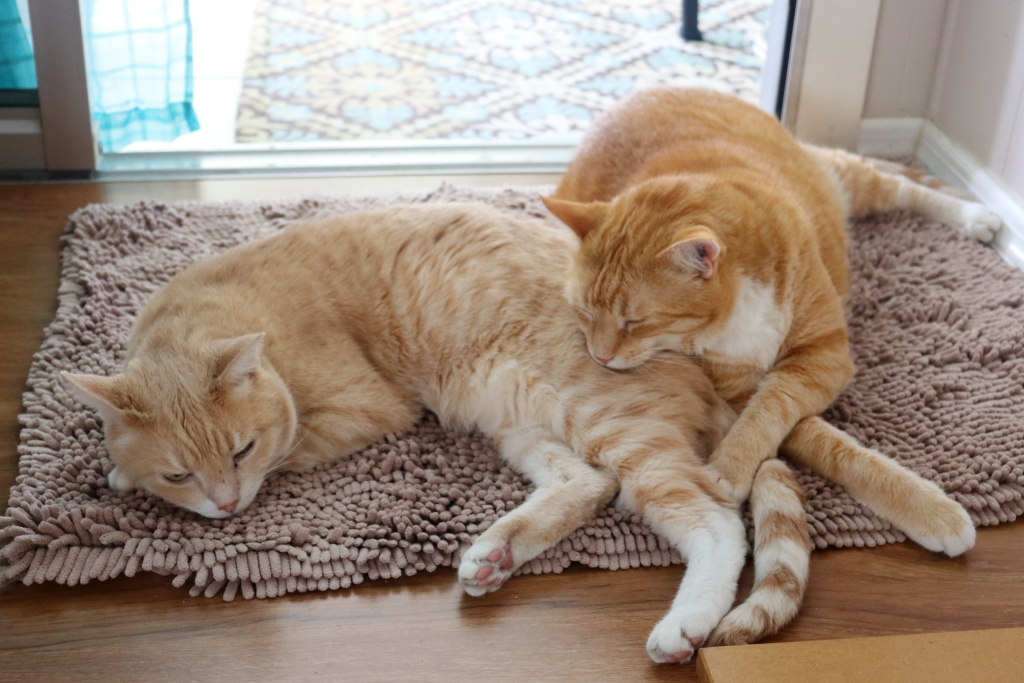
Cats Floki and Chris kissing in sun.

A larger aperture would have made the photo better by blurring out unimportant parts. To get that larger aperture I would have also had to increase the shutter speed which, in this case, would not have hurt the photo. I will talk about that in the next two sections.

Shutter Speed

A shutter is basically a light-proof “curtain” between the lens and the sensor. It slides open to allow light to reach the sensor and then closes after a given amount of time. That time is called the shutter speed and can range from several seconds to 1/4000th of a second. The shutter speed serves two basic purposes. It varies the amount of light reaching the sensor and it can blur or make sharp a moving object.

This is kind of important to know for pet photographers because it is difficult to keep them still while you try to take their photo. Granted, if they turn their heads as you are about to snap the photo, shutter speed won’t help but it will prevent small movements from becoming blurry.

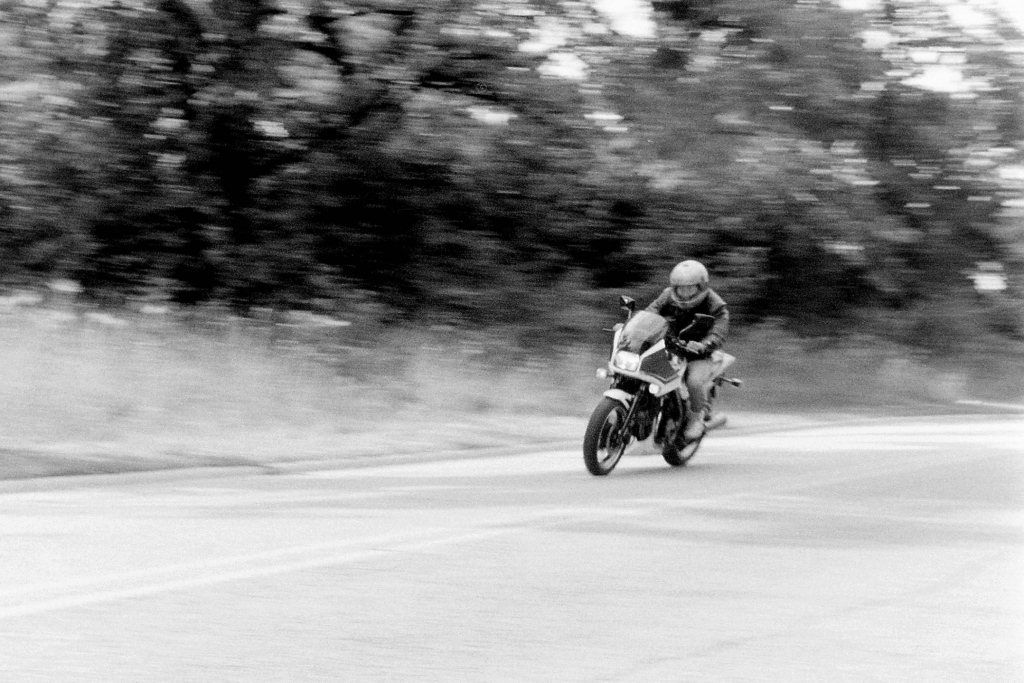
Sometimes you want the blur. A good example would be when you are tracking a moving object across your field of view and you want to convey a feeling of movement in the image. The photo below is an image I took years ago of my friend riding by on his motorcycle.
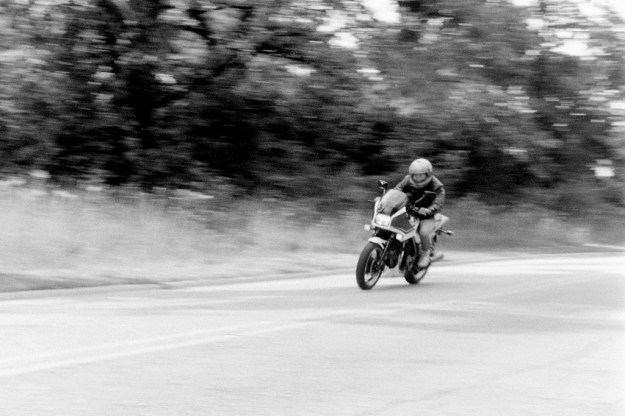
The shutter speed was just slow enough to cause blur in the background from the movement of the camera but since my camera was moving with the subject it stayed relatively sharp. This effect gives the viewer a feeling of speed.

Another reason you would want a fast shutter speed is when you are hand holding the camera. This is especially true when you are using a telephoto or zoom lens. A telephoto lens turns a small camera movement into a large one so a faster shutter speed is needed. The rule of thumb for 35 mm film cameras was that the shutter speed should equal the focal length of the lens or faster when you hand hold the camera. Now, with different size sensors and image stabilization technology, it is difficult to suggest a rule of thumb. It is probably best to check your camera’s manual for tips on this subject.

One other thing that could be useful to know is your “flash sync speed.” This probably won’t apply to anyone using your camera’s built-in flash but if you use an external flash there is a limit to how fast your shutter speed can be. Not every camera is the same so it is good to know what your camera’s sync speed is.

To understand how this works, imagine a stage where the curtain is closed but instead of the left and right curtains both being pulled to the middle, the right curtain is pulled all the way to the left. That curtain is then pulled to the right to expose the stage and when the show is over the left curtain is pulled to the right to close it. Once the audience goes home, both curtains are pulled back to the left for the next show.

A problem with flash photography occurs at higher shutter speeds. To go back to our stage analogy, when a show is very short, like 1/500th of a second (some shows I wished that was the case) the stagehand operating the left curtain starts closing his curtain 1/500th of a second after the other stagehand started pulling her curtain open. Since it takes 1/125th of a second for a curtain to travel across the stage, the entire stage is never in view at one time.

A flash is much faster. It varies but most often the flash speed will be between 1/5000th and 1/30,000th of a second. That means when the flash goes off only part of the stage will be illuminated.

ISO

ISO stands for International Organization of Standardization. This originally represented the “film speed” or its sensitivity to light. I remember it being called ASA (American Standards Association). When shooting film the photographer had to buy different types of film for different lighting conditions. On a digital camera, one can just change a setting.

The ISO number represents the sensor’s sensitivity to light. The higher the number, the less light is needed for a shot. For example, shooting at ISO 100 requires twice as much light as shooting at ISO 200. So why not just shoot everything at the highest ISO? Because every plus has a minus.

During the old days of film, high ISO film meant grainer images. Some photographer’s used that graininess to their advantage but mostly it was a necessary evil. On digital cameras, a high ISO setting results in images that have more digital “noise” that is similar to the old film grain.

Below is a photograph of Frankie shot at ISO 26,500, the maximum for my camera.
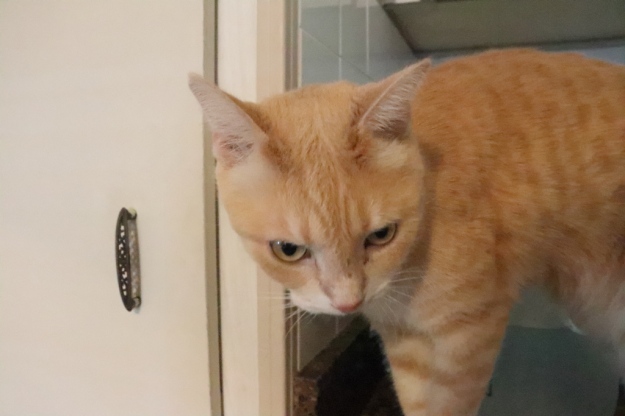
High ISO shot of Cat Frankie

Notice the grain, or noise, when viewed close up.
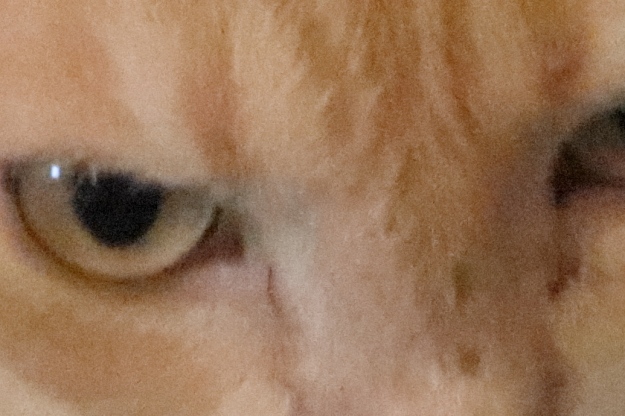
High ISO shot of Cat Frankie close up

Compare that to a photo of Chris at ISO 100.
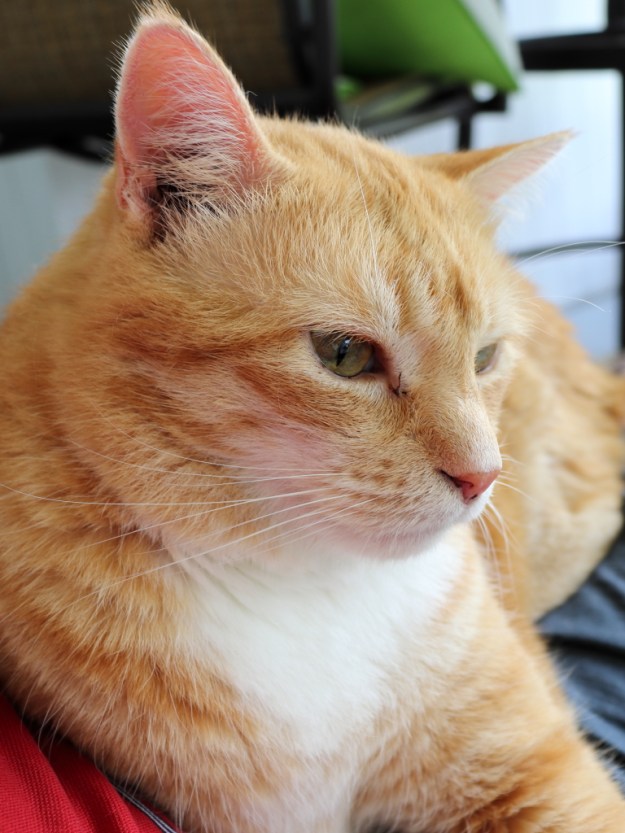
See the difference? The above photo of Chris was cropped but both close-ups are at the same magnification.
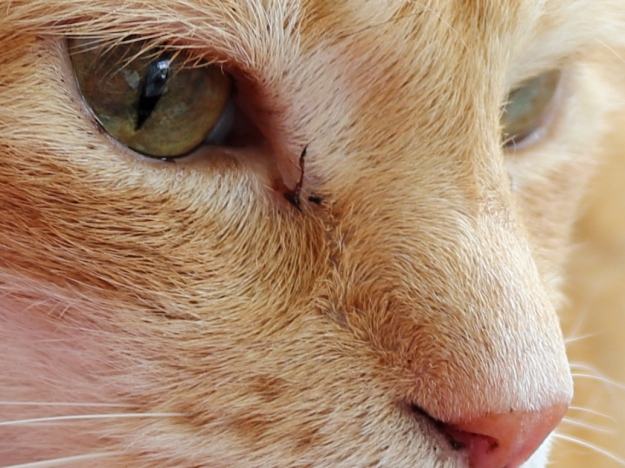
High ISO shot of Cat Chris

Besides the major three settings, there are others that you can play around with, like white balance and HDR, but I want to stick to the basics here.

Since this post is for bloggers I want to talk about file size. Internet speeds and storage space have increased over the years but file size is still important on the web. People are busy now and will not wait more than a few seconds for your page to load so if you have a lot of photos, they should be as small as is reasonable.

There is also storage space provided by your web page hosting service to consider. If you exceed your limit you will need to pay for more storage. WordPress.com gives me 3 gigabytes of storage and so far I have used 37% in over six years of blog posts. If I uploaded my photos full size, that would have been gone long ago.

Conser this: My computer monitor’s screen resolution is (in pixels) 1680×1050. The highest I have seen is 3840×1600 which is 4K. Many are probably the same as an HDTV which is 1920×1080 and there are some older ones that are smaller than mine. Smartphones have similar resolutions but on a much smaller screen. There are 8K monitors coming out but since most blog traffic comes shortly after a post is written I wouldn’t even consider those now.

I chose long ago to use the old XGA resolution (1024 x 768) on most of my photos on this blog. Since the photo never takes up the entire screen, I thought that was a good compromise. I use the canon software that came with my camera and save a copy of the photos I will use to 1024 pixels on the longest side, a little less for square photos.

There is also a quality adjustment for jpeg files that can reduce the file size even further. My program allows a choice between one and ten with ten being the highest quality and largest file size. I choose seven because I don’t notice a quality difference at that level but I do notice slight degradations at level five.

I should note that I treat my photo blog a little different because I only use one photo per blog post and I want it to look good so I reduce it to 1200 pixels with a quality of nine.

I think that should cover the basics. If you have any questions or comments, I’d love to read them.

Camera Review – Canon EOS Rebel SL2


I originally thought that doing a camera review on a cat blog is a bad idea but then I realized that my blog is just as much of a photo blog as it is cat blog and I am sure there are many other pet bloggers that are interested in photography.

My birthday is coming up in a couple of days and I am a hard person to buy for so my wife put it in my hands to find I gift that I would be happy with. So I decided it was time for a new DSLR camera. The camera that I had been using is a Canon EOS Rebel T1i. I got it for Christmas in 2009 and the way that technology advances it should be a dinosaur but, surprisingly, at 15.1 megapixels, it still takes better photos than any smart phone being sold today. Nevertheless, I think I could benefit from an upgrade.

I did somewhat upgrade my camera a couple of years ago. I bought a Canon EOS M1. It is a small, mirrorless, 18-megapixel camera that is not a DSLR but it does have interchangeable lenses. I like it because it takes excellent photos and because it is small, lightweight and much easier to carry around. I don’t like it because it takes way too long to focus. That is fine most of the time but try to get a cat to hold still for more than a second while the camera is focusing. There are several upgrades to the M series that probably corrected that problem and thought about upgrading that camera instead but chose the DSLR instead because it is more obsolete.

I looked around for a long time. I wanted a camera that was at least 24 megapixels but was also reasonably priced. I also wanted a Canon because I have lenses for it and because I have liked Canons since my dad gave me his Canon F1 in 1987.

It came down to the Canon EOS Rebel SL2 or the Canon EOS Rebel T7i. Both cameras had similar features and the T7i had some slight advantages but the SL2 was a bit smaller and lighter, which is helpful when you have to carry it around for a long time. It was also almost $200 less expensive which was a big plus for me.

I ordered the camera on Amazon and paid about $600 for it. The Rebel line is made for amateurs and is significantly less expensive than the pro version without much, if any, loss of picture quality. I think the main difference is in how rugged the camera is built but this will be my third Rebel since 2005 and I never once had a problem with any of the cameras.

It arrived Monday, too soon for my birthday but my wife didn’t care if I opened it, so I did.Canon EOS Rebel SL2

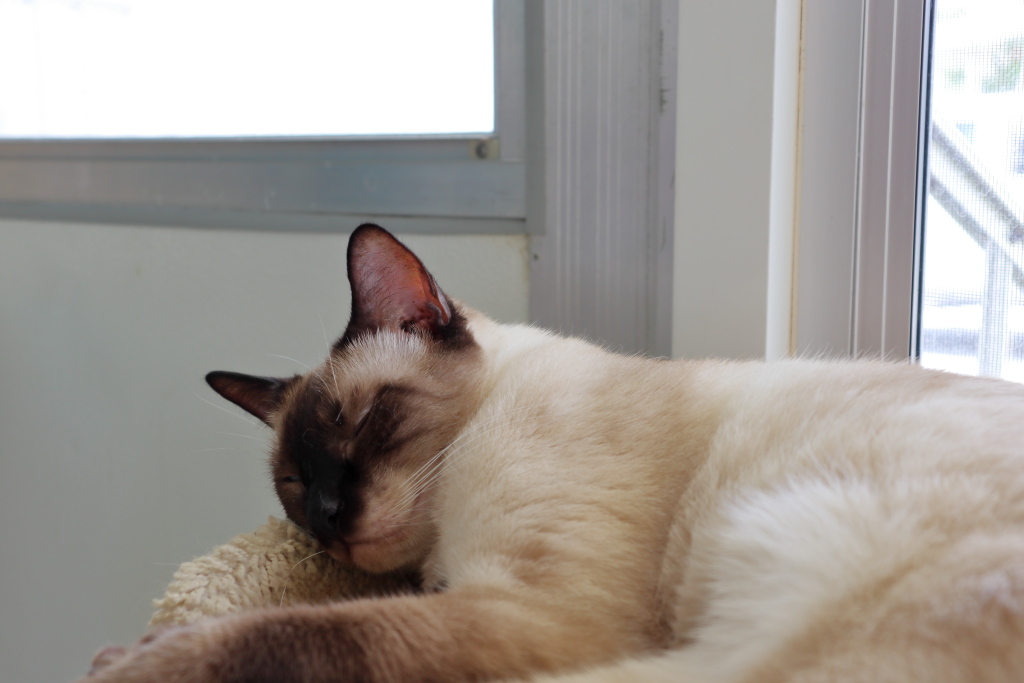
Naturally, I wanted to test it out so I spied Frankie lying on the floor.

cat Frankie

I always set the camera to shoot RAW + Jpeg. This takes up more room but allows me to view all my photos easily and the RAW format gives me more options when editing the photos. I want to say that I then erase any RAW file that I know Is not top quality to save room but I usually forget that step or I am rushed and don’t bother doing it. I didn’t look at the settings until after I took the above photo but it came set up for just Jpeg so I had to change it later.

The camera comes with several options for scene selections and other things but I won’t review those because I don’t use them. I use one of four settings:
  • Program Auto Exposure – This sets the aperture and shutter speed automatically.
  • Shutter Priority – Lets the Photographer select the shutter speed and the camera does the rest.
  • Aperture Priority – This is like shutter priority except it is the aperture that is set by the Photographer.
  • Manual – All settings are set by the Photographer.

Canon EOS Rebel SL2 camera

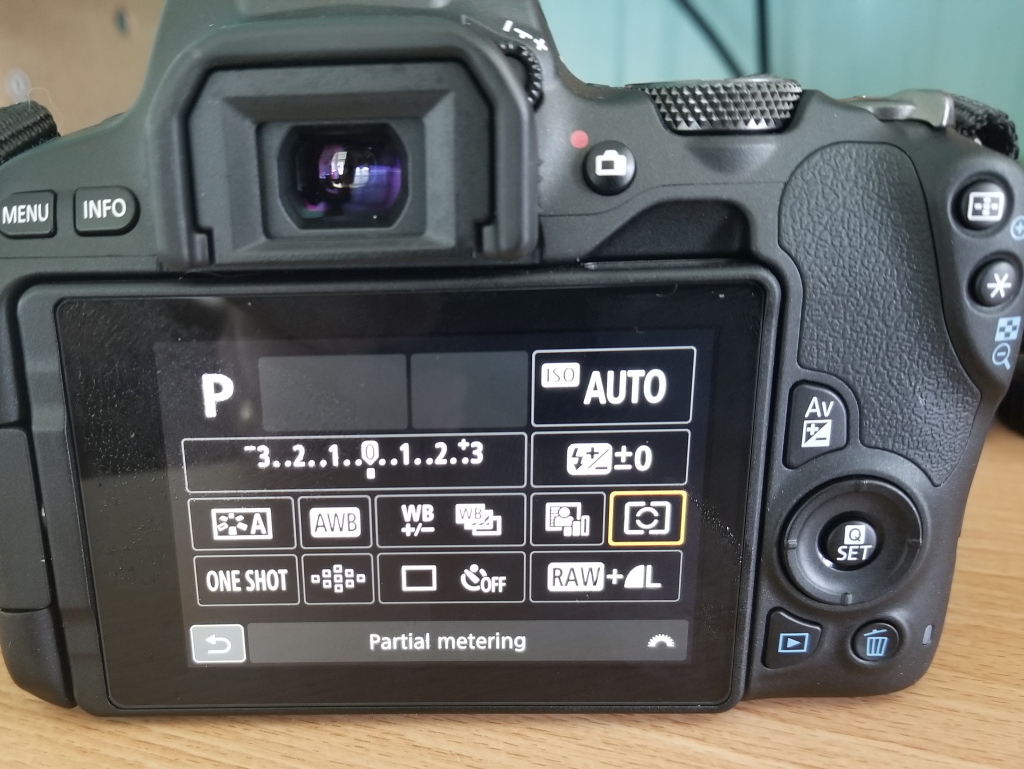
My first Canon Rebel, the XT, was a fine camera but changing a setting was a laborious task. You had to fumble through various menus until you found what you were looking for. This camera has the main settings laid out on an easy to use touchscreen. In addition, the screen can be pulled out for viewing from different angles and then turned for protection when not in use.

Canon EOS Rebel SL2 camera

I have had no opportunity to take this outside for a real-world test but I did take several photos of the cats. I was very impressed with how quickly it focused. There was no noticeable lag time between pushing the shutter release and hearing the sound of the mirror flipping up to take the photo. I’m sure it wasn’t instantaneous but it was fast. I also took several photos very quickly and had to wait for the camera to write them to the SD card. I was using a cheap, slow, memory card and was glad the camera had a large enough cache to accommodate it.

The photo below was taken in the morning before the sun came up so it was relatively low light. I had it set to fully programmable and it used a shutter speed of 1/13th of a second. Typically, I don’t like going below 1/30th of a second when hand holding a camera but, thanks to image stabilization, this photo is pretty sharp.

And thanks to the 24-megapixel sensor, I can zoom in on the eyes with much clarity.
cat Frankie close up

The fast focus also allows me to capture Chris while he is rolling around. It would have been pure luck to get this photo with my M1.

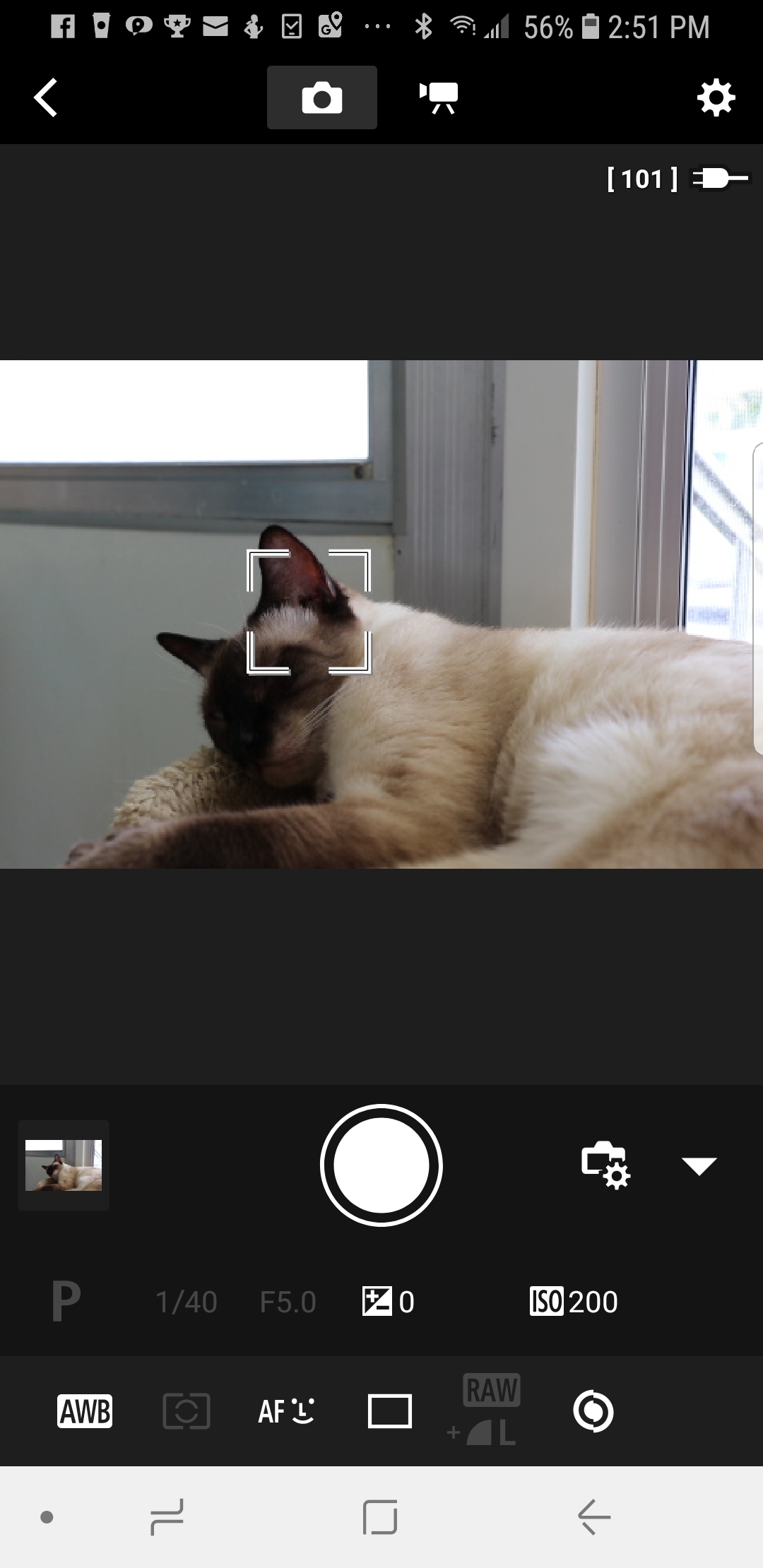
Another great feature is the Canon app that allows you to control the camera with your phone. The app lets you see what the camera sees and you can change settings or take the shot remotely. This is useful for group photos or maybe even for catching your pets being naughty.

Canon connect screenshot - Siamese cat Floki

Here is the photo of Floki that I took remotely.

cat Floki

The app has a couple of other features that I find even more useful. Since the camera does not have GPS, it can take GPS information from your phone and include it in your photos. It also allows you to download photos to your phone so you don’t have to wait until you get home to share your photos on social media.

I plan on taking this camera with me when we go away for my birthday. We are going to the east coast of Florida to visit my wife’s father. We booked a hotel on the beach and we hope to see nesting sea turtles. If we do, I can’t use a flash or other form of light to photograph them and since they only lay their eggs at night it could be a challenge.

What do you think? Do any pet bloggers use a DSLR for your photos? Would anyone be interested in a blog post on basic photography?